Wang Haocheng: "Not Good at Math", Yet Pursuing a PhD
Published on May 5, 2026
"I'm not very good at math."
Wang Haocheng repeats this line when reflecting on his journey. What sounds like self-deprecation is also a clear recognition of his limitations—one that pushed him to explore beyond conventional paths and eventually find his direction.
From delaying graduation by half a year, to rejecting traditional mathematics programmes, to interning at the then little-known DeepSeek, and later receiving a PhD offer from The Hong Kong University of Science and Technology (Guangzhou) while participating in a project at ETH Zurich - his path has been anything but linear.
Looking back, however, a pattern emerges: opportunities did not appear suddenly. They grew out of small, proactive steps - reaching out, collaborating, and being recognized.
Image
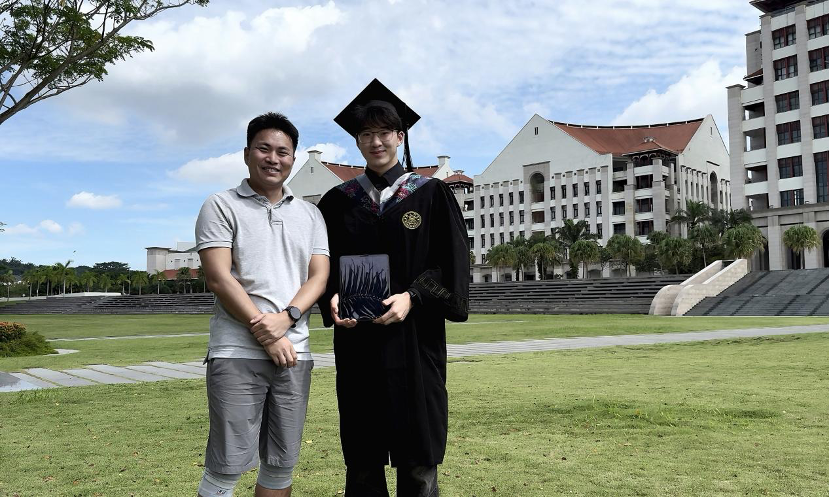
Wang Haocheng (right) with Dr. Ma Jiajun
It began by chance.
When choosing his final-year project, Wang Haocheng was late, and only one option remained: formalized mathematics under Dr. Ma Jiajun. Although the group was already full, Dr. Ma offered him a chance: Complete an assigned task, and he could join.
Wang Haocheng treated it as a final opportunity and succeeded. He now sees it as a turning point.
Unlike traditional mathematics, formalized mathematics expresses proofs as code and verifies them step by step using computers. While Wang Haocheng did not consider himself strong in traditional mathematics, he found this structured approach more accessible and engaging.
With the rise of artificial intelligence, fields like automated theorem proving have gained attention. Through Dr. Ma's recommendation, Wang Haocheng joined workshops at Peking University and the National University of Singapore.
Working with international peers, he completed short, intensive research projects. "That ‘zero to one' experience was the first time I felt the appeal of research," he said.
It also led him to rethink his future.
In 2024, Wang Haocheng received several offers for taught master's programs but chose not to accept them.
"I felt that path would likely lead to a conventional job. That wasn't what I wanted."
Instead, he delayed graduation and began exploring. In June 2024, he joined DeepSeek as an intern, working on AI-related mathematical models.
"What impressed me most was the team," he said. "No one waited for tasks. If someone raised a question, everyone would gather to discuss it. That's what an ideal team looks like to me."
A colleague had a particularly strong influence on him, not only technically, but also by showing respect for his ideas. "That made me believe I could contribute in this field."
Through this connection, Wang Haocheng later joined ByteDance's Seed team to continue research. These experiences gave him a clearer understanding of the field. He began actively expanding his academic network—attending conferences, engaging in communities, and reaching out to professors worldwide.
"I was emailing every day, talking to professors from UCL, Cambridge, CMU, and others."
He became interested in Prof. Guo Zhijiang's group at HKUST (Guangzhou), while also seeking broader exposure. Through online connections, he secured a visiting research opportunity with Professor Rasmus Kyng at ETH Zurich.
Image
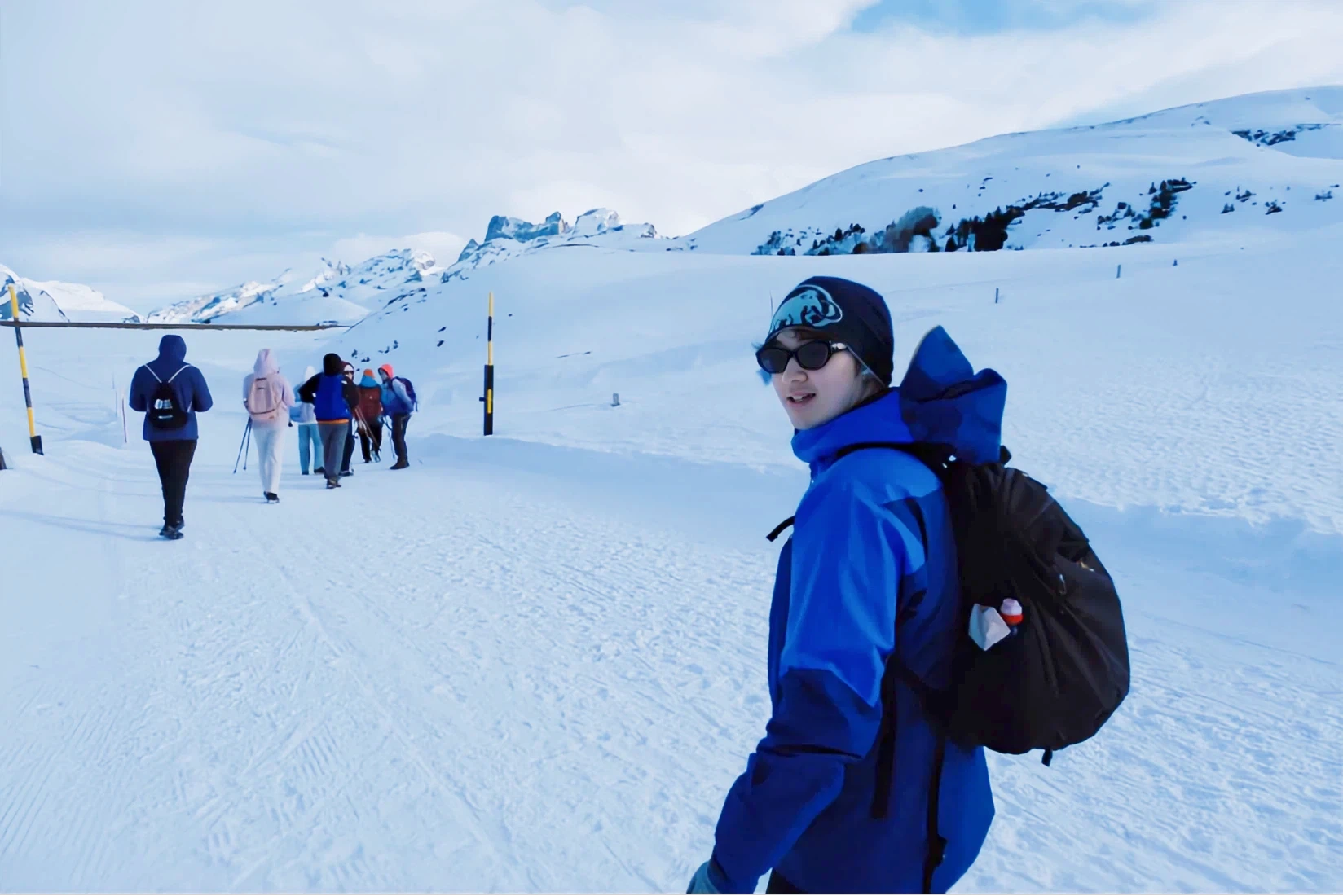
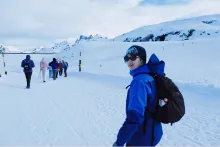
Wang Haocheng in Switzerland
Supported by both sides, he spent six months in Zurich. While he appreciated the academic environment, he realized the research direction there leaned more toward theoretical computer science, whereas he preferred AI-related work combining theory and application.
This helped him clarify his goals.
In January 2026, he joined HKUST (Guangzhou) as a PhD student, while continuing collaborations with ETH.
"Many opportunities come from building connections and letting them grow," he said.
Looking back, Wang Haocheng sees both chance and intention in his journey. From entering a niche field to exploring different environments, each step involved uncertainty—but also deliberate effort.
He explains his thinking through a statistical analogy:
"When the number of trials increases, the sample mean approaches the true expectation. Life is similar. The more you try, the better you understand what suits you."
His advice to younger students is simple:
"Try more. Many people don't know what they want because they haven't tried enough."
While specialization matters for careers, he believes exploration is crucial for making life decisions.
Now committed to research, Wang Haocheng hopes to pursue an academic career and become a professor. At the same time, he remains open to future possibilities.
In an uncertain world, his approach is clear: keep exploring, build connections, and choose the path closest to your goals.
Image
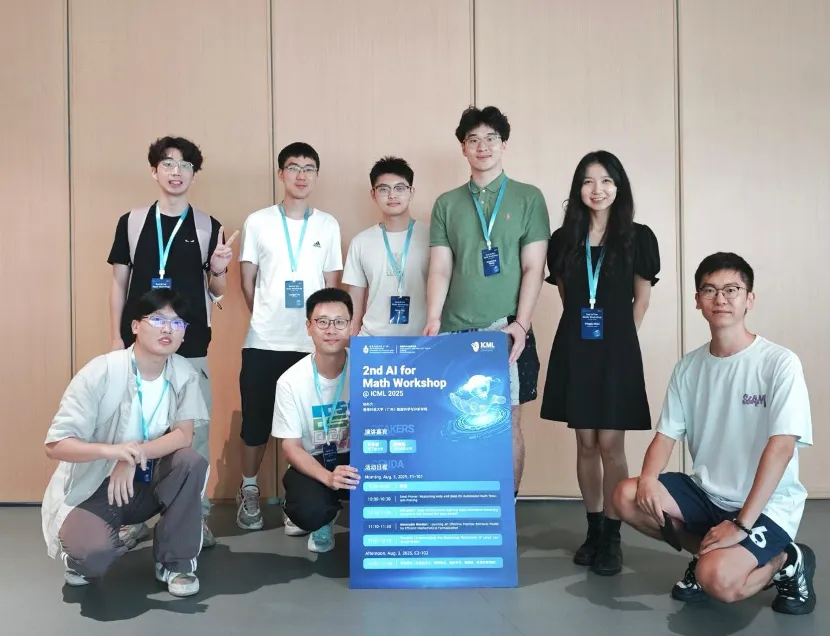
Wang Haocheng with his current reasearch team