


What Our Students Say About Us
- Image
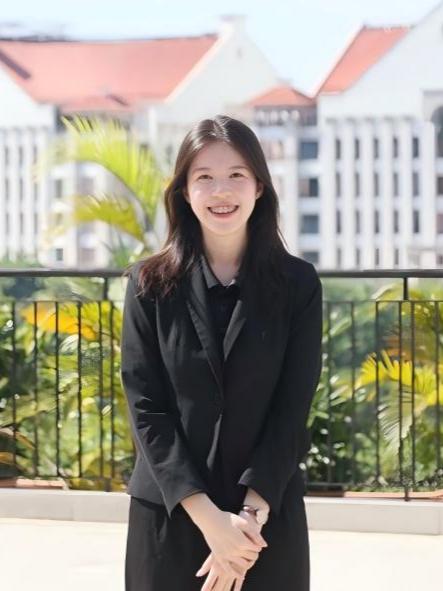 Looking back on my studies in E-Commerce at Xiamen University Malaysia, I am grateful for the platform and support provided by the university. This journey has not only strengthened my professional foundation, but also shaped a mindset of adaptability, continuous learning, and readiness for future challenges.★★★★★Wong Kang NingAlumni, Bachelor of Management in E-Commerce
 - Image
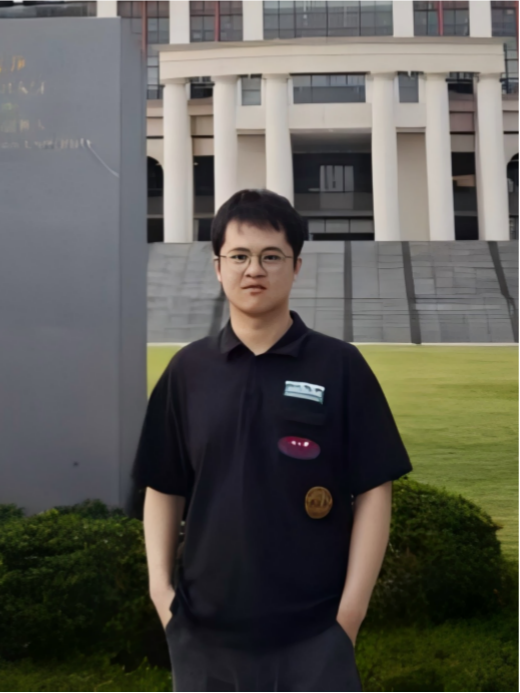 My journey at Xiamen University Malaysia began with curiosity about an unfamiliar world. Over the past few years, XMUM has given me the space to adapt, explore, and discover my direction. With the guidance of supportive teachers, a multicultural campus environment, and opportunities in research, competitions, and internships, I gradually built a stronger academic foundation and turned a small spark of curiosity into a lasting passion.★★★★★Li ZhanAlumni, Bachelor of Chemical Engineering
 - Image
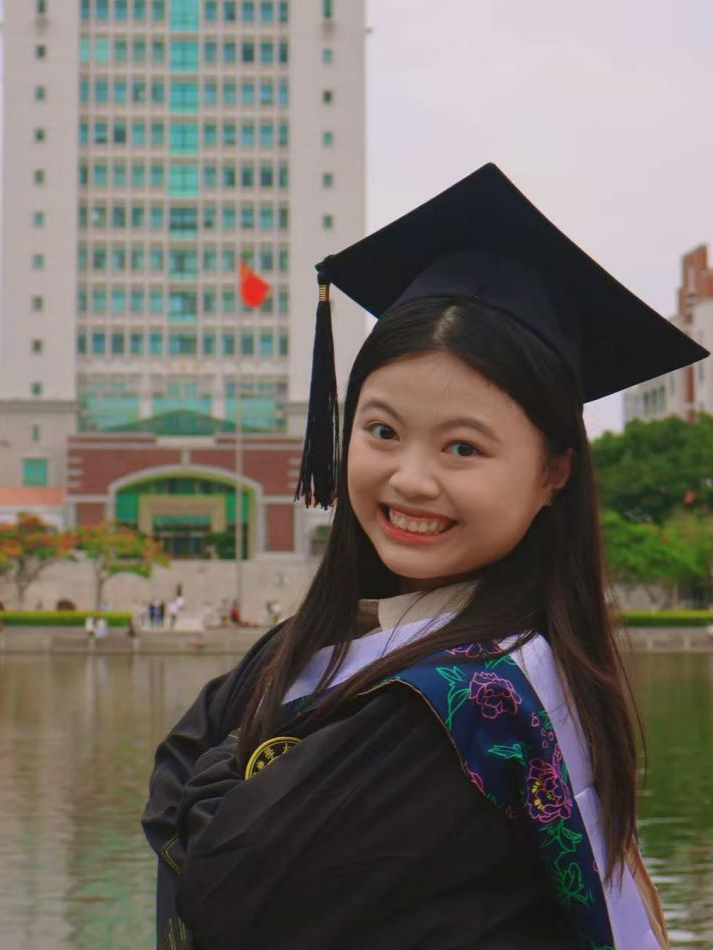 I once thought medicine only belonged to the world of Western medicine, until my studies at Xiamen University Malaysia opened another path for me. The Traditional Chinese Medicine programme allowed me to learn from classical theories, community medical services, research projects, and clinical training in China, gradually helping me see the depth and relevance of TCM. What began as an unfamiliar choice has become a field I hope to continue exploring with responsibility, curiosity, and courage.★★★★★Lim Jie YiAlumni, Bachelor of Medicine in Traditional Chinese Medicine
 - Image
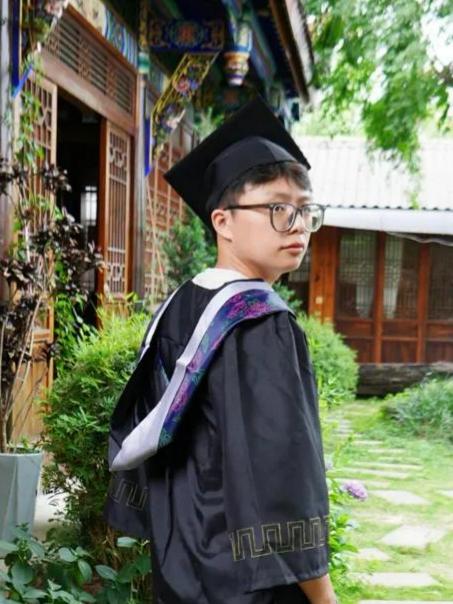 My experience at Xiamen University Malaysia gradually helped me build a connection with China’s academic environment. Through English-taught mathematics courses, reading groups, competitions, and academic exchange opportunities, XMUM gave me the space to see a bigger world through mathematics. Research is a marathon; everyone may move at a different pace, but what matters more is whether we can keep moving forward.★★★★★Bryan Ng Zheng QuanAlumni, Bachelor of Science in Mathematics and Applied Mathematics
 - Image
 Studying English at Xiamen University Malaysia allowed me to explore language beyond the classroom. With lecturers who listened to my ideas, understood my perspective, and offered encouragement rather than criticism, I gained the confidence to think more deeply and creatively. My time at XMUM also helped me see language not only as a tool for communication, but as a way to understand history, culture, people, and the wider world.★★★★★Tan Ann NgeeAlumni, Bachelor of Arts in English Language and Literature
 - Image
 I came to Xiamen University Malaysia without knowing exactly where EEE would take me, but I learned to find meaning through trying. In courses, competitions, student societies, and my final-year AI project, I gradually understood that engineering is not just about calculations or formulas, but about turning ideas into something useful and improving them through practice. My time at XMUM also helped me develop the engineering mindset and soft skills to communicate, work with others, and face real-life challenges with more confidence. I gained much more than I expected.★★★★★Lim Li ChuinAlumni, Bachelor of Electrical and Electronics Engineering
 - Image
 My journey at Xiamen University Malaysia was about much more than academic learning. It was a period of discovering new interests, building meaningful friendships, and learning how to step out of my comfort zone. Through classroom learning, student activities, and experiences beyond campus, I gradually became more confident, open-minded, and purpose-driven. This journey also taught me that education is not only about grades or certificates, but about how we think, connect with others, and find the direction that truly suits us.★★★★★Sanjaya JansonAlumni, Bachelor of Management in International Business
 - Image
 My years at Xiamen University Malaysia placed me in a cultural world I had never expected to enter. Through the Digital Media Technology programme, video-related coursework, and three years of hands-on experience, I gained practical experience in visual storytelling, editing, communication, and collaboration. More importantly, the people, stories, and cultural encounters I experienced at XMUM helped me see Malaysia from new perspectives.★★★★★Du HaoyuAlumni, Bachelor of Engineering in Digital Media Technology
See Our Highlights
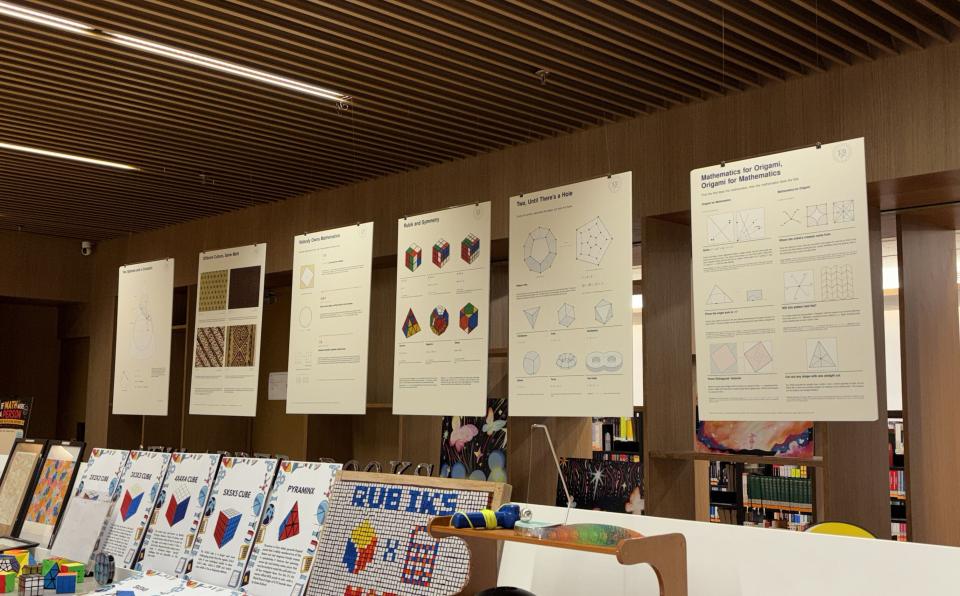
Mathematics Week Launched at XMUM
The Department of Mathematics Student Council and XMUM Library launched Mathematics Week on 20 October 2026, marking their first collaboration to showcase the relevance and appeal of mathematics through art, interactive exhibits and hands-on activities.Held at the XMUM Library in the A3 building, the event features more than 100 exhibition displays exploring mathematics in campus life, different cultures, art and academic disciplines. The programme aims to make mathematics more accessible and engaging beyond the classroom. Image Interactive exhibits and puzzles engage visitors during Mathematics Week at XMUM Library.Activities include a library puzzle hunt featuring more than 20 puzzle placards hidden throughout the library, interactive game booths and a mathematics-themed stock market game. Participants can scan QR codes to submit puzzle answers, earn leaderboard points and compete for prizes.The interactive game booths feature challenges such as Plinko, Poker Magic, Conway’s Soldier, Tower of Hanoi and a murder mystery game. The MAT Stock Market game allows participants to trade indices based on library data, manage their portfolios and earn points according to their performance.The event also features mathematics-inspired art installations, book and article showcases, and large-scale displays around the library. While Mathematics Week runs until 25 October, selected installations will remain on display throughout November.No registration is required to explore the exhibition and activities. For more information, visit the Department of Mathematics student activities page or follow the MAT Student Council on Instagram at @xmum_math. Image Mathematics-inspired displays at XMUM Mathematics Week
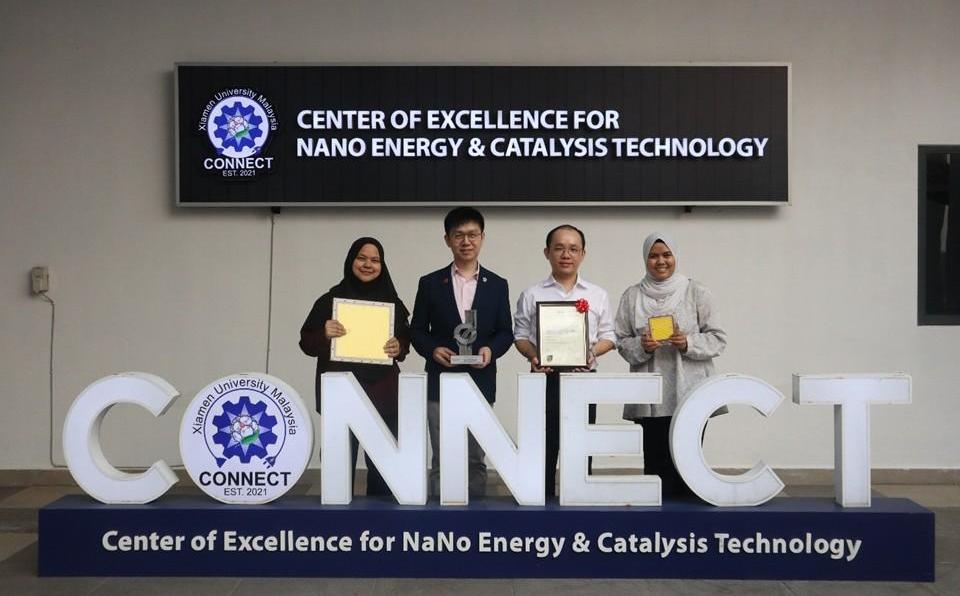
Prof. Ong Wee Jun and Team Win IChemE Malaysia Energy Award 2026
The Research and Postgraduate Centre congratulates Prof. Dr. Ong Wee Jun and Dr. Tan Ji Siang from Xiamen University Malaysia (XMUM), Center of Excellence for NaNo Energy & Catalysis Technology (CONNECT), School of Energy and Chemical Engineering (SECE) for being awarded the IChemE Malaysia Energy Award 2026 for their project, "Integrated Photocatalytic Solar-to-Hydrogen Panels for Renewable Hydrogen Production, Storage, and Clean Electrification”.Aiming to support the advancement of integrated systems for solar-driven hydrogen generation and potential clean-energy applications, the project focuses on integrating photocatalytic solar-to-hydrogen panels with hydrogen production, storage and clean electrification, addressing key challenges in the development of renewable energy technologies.The award ceremony was held in Kuala Lumpur on 5 October 2026 and presented by the Institution of Chemical Engineers (IChemE), a UK based and internationally recognised qualifying body and learned society for chemical, biochemical and process engineers. Photo of the presentationProf. Dr. Ong acknowledged the contributions of the wider research team, including postdoctoral research fellow Dr. Noor Ashikin Binti Mohamad and research engineer Ms. Nurul Aqilah Binti Razali. The project was developed in close collaboration with NanoMalaysia Berhad (NMB).Group photoAs the recipient of the national award, CONNECT will go on to represent Malaysia at the IChemE Global Awards 2026.
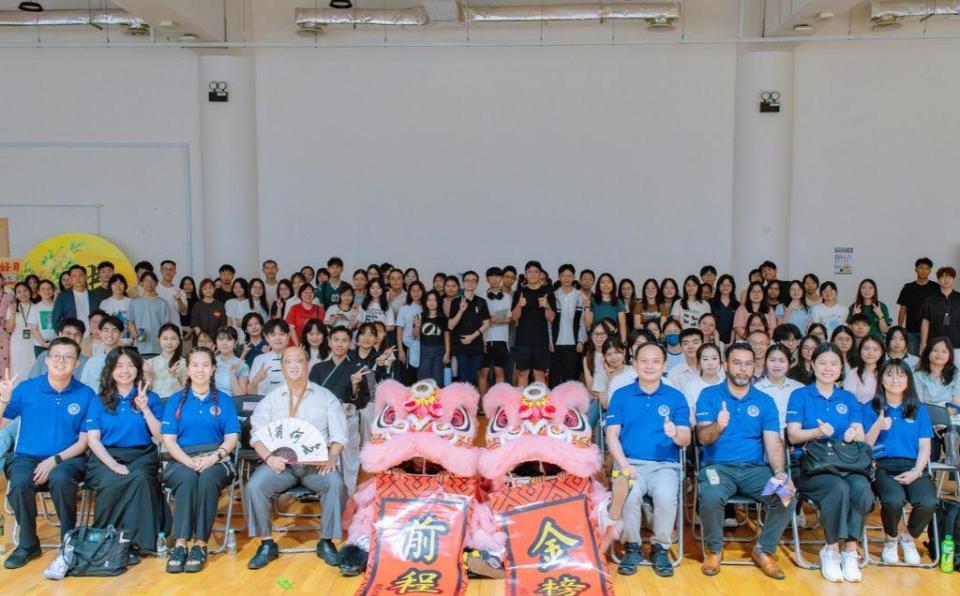
STCM Honours Academic Excellence and Hosts Mid-Autumn Gala
On 8 October 2026, the School of Traditional Chinese Medicine (STCM) at Xiamen University Malaysia (XMUM) held its Dean's List Award Ceremony and the “Golden Autumn of the Eighth Lunar Month” Mid-Autumn Festival Gala, celebrating students' academic achievements and the festive season.Group Photo of the Dean's List Award CeremonyDuring the ceremony, four STCM students and their two faculty supervisors, Prof. Dr. Chen Shaodong and Dr. Muhammad Shahzad Aslam, were recognised for winning the Bronze Award in the International Track at the 2026 Grand Finals of the 12th China Undergraduate Medical Innovation Tournament & The Belt and Road International Competition.Prof. Dr. Chen Shaodong and Dr. Muhammad Shahzad Aslam presenting awards to the winning student teamThe Dean’s List Award Ceremony recognised 82 students for their academic achievements in the September 2025 and April 2026 semesters. Prof. Dr. Chen Shaodong, Dr. Chep Lee Lu Siang, Head of Programme at STCM, and other faculty members presented awards to the recipients.Prof. Dr. Chen Shaodong presenting the Dean's List Award to a recipientThe Mid-Autumn Festival Gala featured food stalls, tea tasting, interactive games, hands-on workshops, student performances and a lucky draw, bringing students and faculty members together to celebrate the traditional festival.Student performances at the Mid-Autumn Festival GalaGroup Photo of the "Golden Autumn of the Eighth Lunar Month" Mid-Autumn Festival Gala
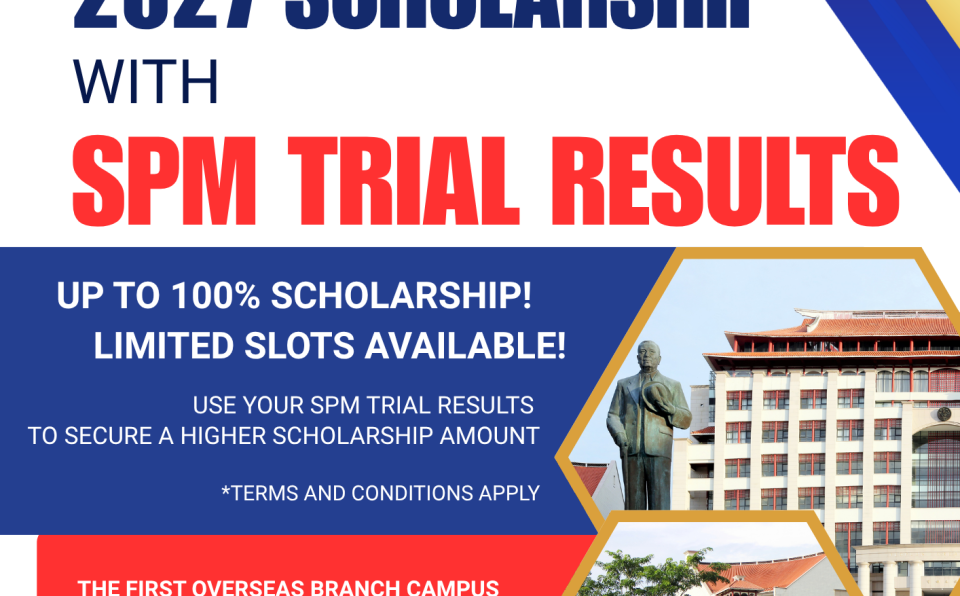
Apply for the 2027 Scholarship with SPM Trial Results
Image 🎓 3As in your SPM Trials? Your next chapter could start at XMUM! ✨SPM 2026 students, why wait for your official results to start planning your future?Malaysian citizens with at least 3 A grades (A+, A or A−) in their SPM Trial examinations can apply early for scholarships for Xiamen University Malaysia’s 2027 Foundation intakes. 🌏🌟 More As, more possibilities!Your scholarship percentage will be based on whichever set of results—your SPM Trial or official SPM results—has more A grades!Dream big. Explore your passion. Take your first step towards the future you imagine. 🚀💡 Apply early. Study smart. Succeed globally.💬 Curious about your scholarship opportunities? Chat with us: https://wa.me/60376102079🎓 SPM 预考拿到 3 个 A?你的大学梦想,可以提前启航!✨SPM 2026 考生们,不必等到正式成绩公布,才开始规划未来!只要你是马来西亚公民,并在 SPM 预考中取得至少 3 个 A(A+、A 或 A−),就能提前申请厦门大学马来西亚分校(XMUM)2027 年预科课程奖学金!🌏🌟 奖学金比例将以预考或正式 SPM 成绩中,A 等级数量较多的一份成绩计算。从探索热爱,到追逐梦想,你的下一篇章,由你开启🚀💡 提早申请,智慧求学,迈向世界。💬 想了解你的奖学金机会?欢迎通过 WhatsApp 咨询:https://wa.me/60376102079
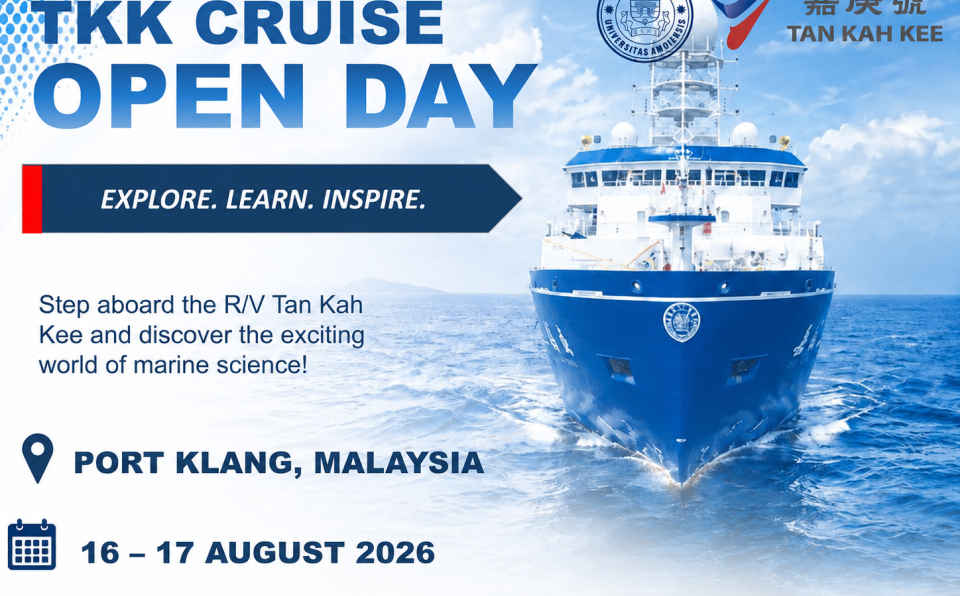
R/V Tan Kah Kee Port Klang Open Day
Image Xiamen University's prestigious research vessel, the R/V Tan Kah Kee, will be docking at Port Klang Cruise Terminal (PKCT) this August.This is a unique opportunity to explore a state-of-the-art oceanographic research vessel, and we warmly invite everyone to join our FREE guided tours.Registration InformationFor participants who wish to take the complimentary bus between XMUM and PKCT, please sign in using your XMUM staff/student ID when making your reservation.Bus transportation is available only for the following two sessions (limited seats):16 August, 10:00 AM16 August, 2:00 PM17 August, 10:00 AM17 August, 2:00 PMIf you plan to drive to PKCT on your own or wish to join any other available tour session, please register using your personal email address and select PUBLIC during registration.Registration Link: https://events.xmu.edu.my/tkkrv/port-klang/Registration deadline: 13th August 2026, 12 PM About the R/V Tan Kah KeeThe R/V Tan Kah Kee is a global-class, 3,600-ton oceanographic research vessel equipped with cutting-edge marine science exploration technology. Known as the "Marine Campus of Xiamen University," it supports real-time observations and on-site scientific research across multiple disciplines, including hydrology, chemistry, biology, geology, geophysics, and atmospheric science.Spaces are limited, so register early to secure your preferred session.
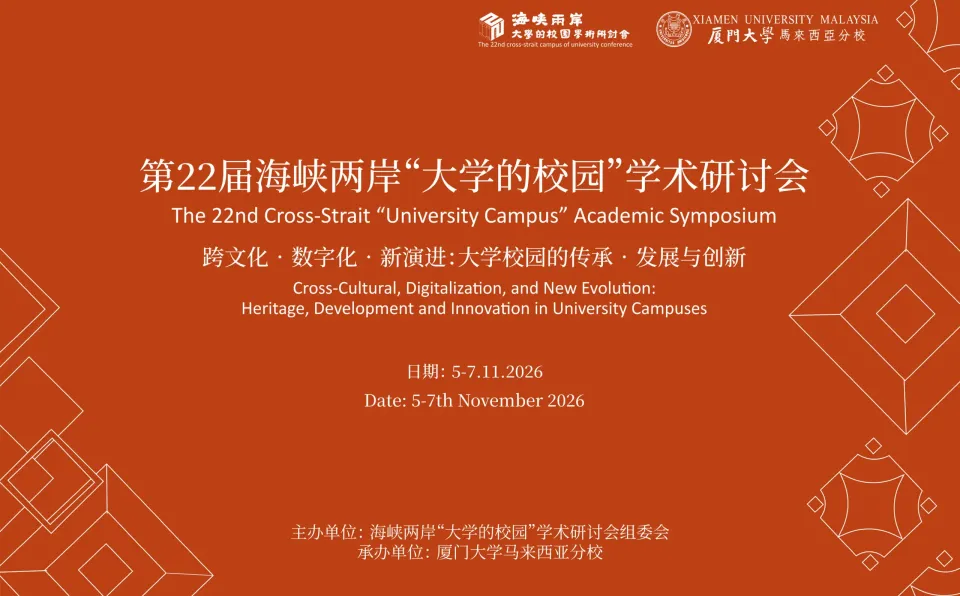
The 22nd Cross-Strait “University Campus” Academic Symposium
研讨会简介About the Symposium海峡两岸“大学的校园”学术研讨会于 2001 年 12 月 6 日由北京大学发展规划部联合台湾沈祖海建筑文教基金会首次举办,旨在庆贺侯仁之院士九十华诞并开启两岸学术对话。二十余年来,研讨会秉持“校园承载大学精神、空间映照教育理念”的核心宗旨,围绕大学校园规划、建筑设计、文化传承、教育空间、人文精神与城市发展等议题展开深入讨论,逐步发展成为两岸大学校园研究领域最具影响力与持续性的学术平台之一。历届研讨会先后由北京大学、厦门大学、湖南大学、西安建筑科技大学、深圳大学、天津大学、沈阳建筑大学等高校承办,汇聚了海峡两岸建筑学、城市规划、教育学、文化研究及校园管理等领域的专家学者。会议不仅关注大学校园的物质空间与规划设计,更强调大学精神、文化积累、社会责任与区域协同发展的深层价值,持续回应全球化、数字化、生态转型与城市更新背景下大学校园所面临的新挑战与新机遇。2026年海峡两岸“大学的校园”学术研讨会将于2026年11月在厦门大学马来西亚分校举办,由分校图书馆承办。本届会议以“跨文化・数字化・新演进:大学校园的传承,发展与创新”为主题,结合跨境高等教育发展与数字时代校园转型的全球趋势,重点探讨大学校园空间演进、跨文化共生、校城融合、知识服务及学习环境创新等议题。会议旨在进一步推动海峡两岸及国际高校之间的学术合作与经验共享,深化大学校园研究的人文关怀与国际视野,并为未来大学校园建设、知识传播与教育创新提供新的理论思考与实践路径。The Cross-Strait “University Campus” Academic Symposium was established on 6 December 2001 through a joint initiative by the Department of Development Planning of Peking University and the Shen Zuhai Architectural and Educational Foundation in Taiwan. Originally organized to celebrate the 90th birthday of Academician Hou Renzhi, the conference sought to initiate sustained academic dialogue across the Taiwan Strait with university campuses as its central concern. Over the past two decades, the conference has upheld the principle that campuses embody the spirit of universities, while spatial forms reflect educational philosophies. Through continuous discussions on campus planning, architectural design, cultural heritage, educational space, humanistic values, and urban development, it has gradually become one of the most influential and enduring academic platforms in the field of university campus studies across the Taiwan Strait. Previous editions of the conference have been hosted by leading institutions including Peking University, Xiamen University, Hunan University, Xi’an University of Architecture and Technology, Shenzhen University, Tianjin University, and Shenyang Jianzhu University. The conference has brought together scholars and professionals from the fields of architecture, urban planning, education, cultural studies, and campus administration. Beyond discussions of physical space and campus design, the conference has consistently emphasized broader concerns including university spirit, cultural continuity, social responsibility, and regional collaboration, while responding to emerging challenges and opportunities associated with globalization, digital transformation, ecological transition, and urban renewal. The 2026 Cross-Strait “University Campus” Academic Symposium will be held in November 2026 at Xiamen University Malaysia and hosted by the Xiamen University Malaysia Library. Under the theme “Cross-Cultural, Digitalization, and New Evolution: Heritage, Development and Innovation in University Campuses,” the conference will address global trends in cross-border higher education and digital-era campus transformation. Particular attention will be given to issues such as the evolution of campus spaces, intercultural coexistence, university–city integration, knowledge services, and innovation in learning environments. The conference aims to further strengthen academic collaboration and intellectual exchange among universities across the Taiwan Strait and beyond, deepen the humanistic and international dimensions of university campus studies, and contribute new theoretical insights and practical approaches to the future development of university campuses, knowledge dissemination, and educational innovation.会议主题与子议题Symposium Theme and Sub-themes主题:跨文化・数字化・新演进:大学校园的传承,发展与创新Theme: Cross-Cultural, Digitalization, and New Evolution: Heritage, Development and Innovation in University Campuses子议题:Sub-theme: (1) 数字时代:大学校园演进、变革与空间转型Digital Era: Evolution, Transformation, and Spatial Transition of University Campuses(2) 跨文化共生:跨境大学发展及区域贡献Intercultural Coexistence: The Development and Regional Contributions of Cross-Border Universities(3) 校城融合:大学空间边界、更新与遗产保护University–City Integration: Spatial Boundaries, Urban Renewal, and Heritage Conservation of University Campuses(4)知识服务:图书馆转型与校园学习环境创新Knowledge Services: Library Transformation and Innovation in Campus Learning Environments 主办单位与承办单位Organizer and co-host主办单位:海峡两岸“大学的校园”学术研讨会组委会Organizer: Organizing Committee of the Cross-Strait “University Campus” Academic Symposium承办单位:厦门大学马来西亚分校图书馆Co-host: Xiamen University Malaysia Library缴费方式: 请通过 https://epayment.xmu.edu.my/event-listing 完成缴费Payment via: https://epayment.xmu.edu.my/event-listing缴费时间: 2026年9月15日至2026年10月30日。Payment period: 15 September 2026 – 30 October 2026 Image