Prof. Ong Wee Jun and Team Publish Three High-Impact Reviews in Leading Journals
Published on July 15, 2026
The Research and Postgraduate Centre congratulates Prof. Dr. Ong Wee Jun, his postgraduate students, and the research team from the School of Energy and Chemical Engineering and the Center of Excellence for NaNo Energy & Catalysis Technology (CONNECT), Xiamen University Malaysia, on publishing three high-impact review articles in Nano Materials Science (Impact Factor: 20.5), Advanced Functional Materials (Impact Factor: 19.9), and Small Methods (Impact Factor: 8.7). These publications demonstrate CONNECT's continued leadership in nanomaterials, plasma technology, and sustainable energy research under the supervision of Prof. Dr. Ong Wee Jun.
The first review, “Atmospheric Pressure Microwave Plasma Synthesis of Free-Standing Graphene from Carbon Feedstocks and Its Applications”, published in Nano Materials Science, was led by Elton Mah Song-Zhe, with contributions from Chiah Zi-Jing, both PhD candidates. The review highlights atmospheric pressure microwave plasma (APMP) as an efficient and sustainable approach for producing free-standing graphene directly from carbon feedstocks without requiring a solid substrate. It provides valuable insights into how plasma conditions influence graphene formation and explores its potential applications in sustainable technologies.
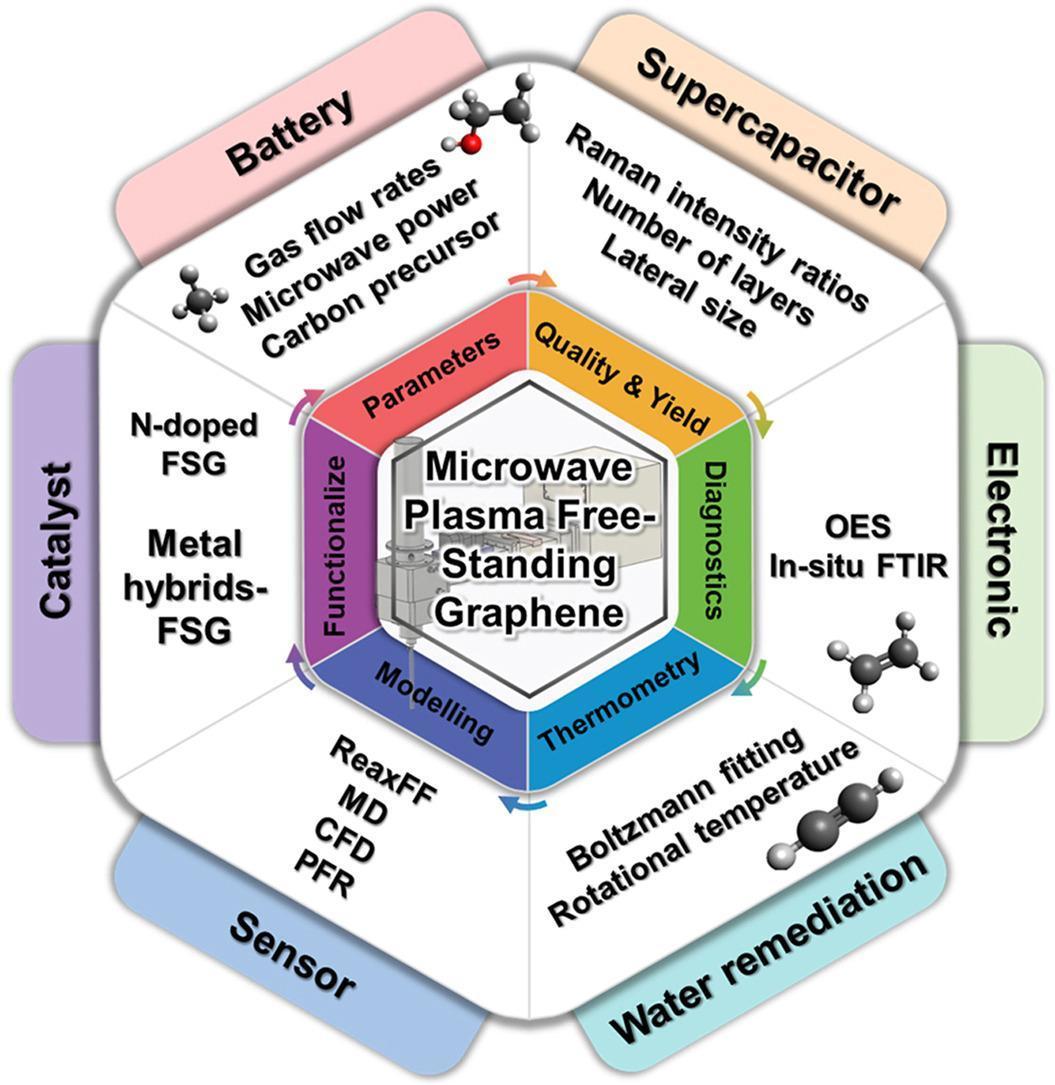
Graphical abstract of the work published in Nano Materials Science.
The second review, “Advancements in Free-Standing Graphene Synthesis Using Electrodeless Microwave Plasma”, published in Small Methods, was co-first-authored by Master's students Neil Felicio Agesta and Woo Yun-Le, together with Elton Mah Song-Zhe and Chiah Zi-Jing. The review examines electrodeless microwave plasma as a scalable and energy-efficient graphene production method. It addresses current challenges in graphene manufacturing while discussing future opportunities through computational modelling, artificial intelligence, and machine learning to optimise production processes.
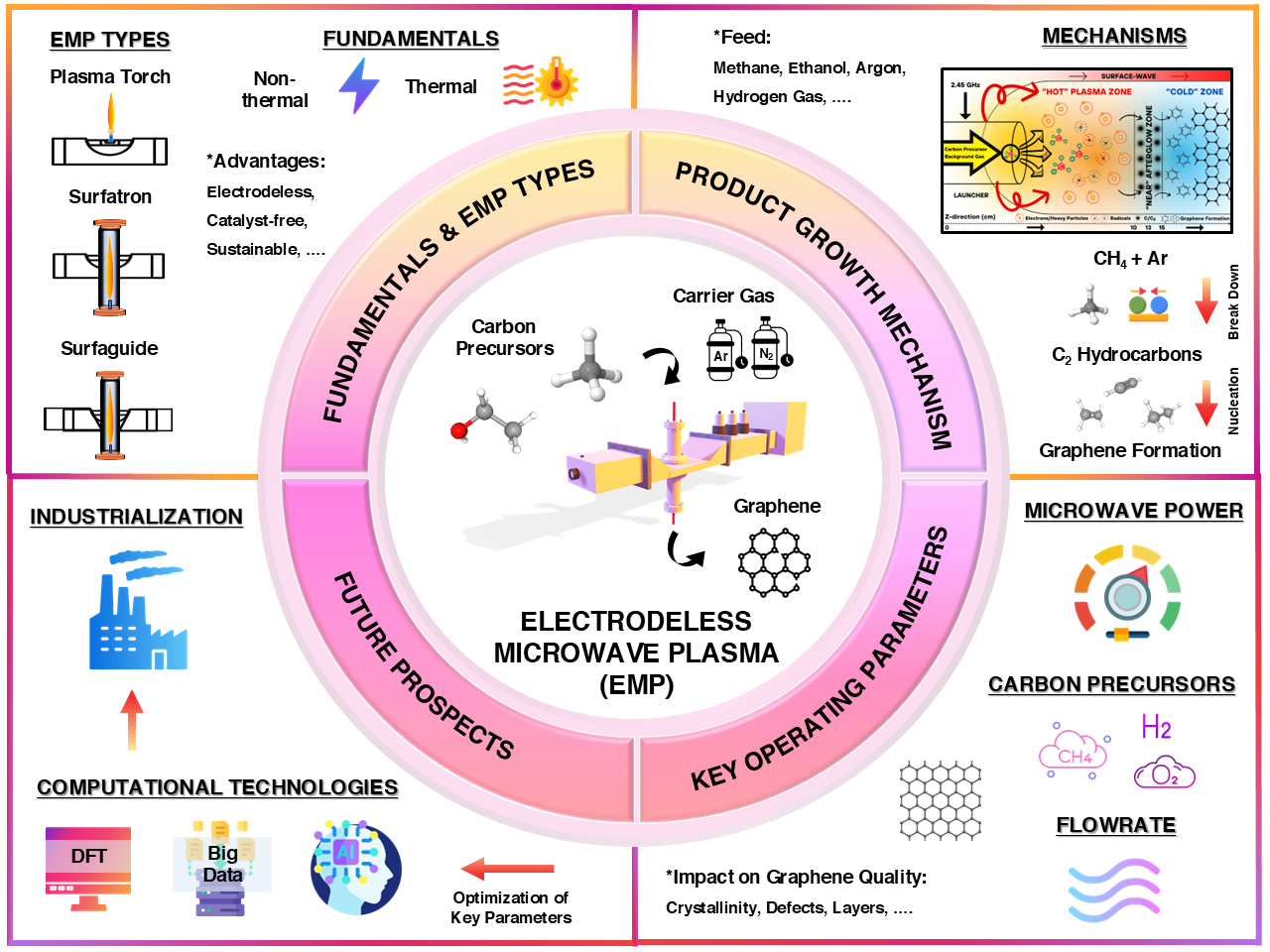
Graphical abstract of the work published in Small Methods.
The third review, “Engineering Nanocatalysts for Artificial Photosynthesis-Driven Plastic Reforming Toward Sustainable Hydrogen and Chemical Production”, published in Advanced Functional Materials, was first-authored by Master's student Gan Eng Soon. The article provides a comprehensive review of artificial photosynthesis-driven plastic reforming, highlighting nanocatalyst engineering strategies for converting plastic waste into hydrogen and value-added chemicals. The publication was selected as the Inside Back Cover of Advanced Functional Materials, recognizing its scientific significance and conceptual impact.
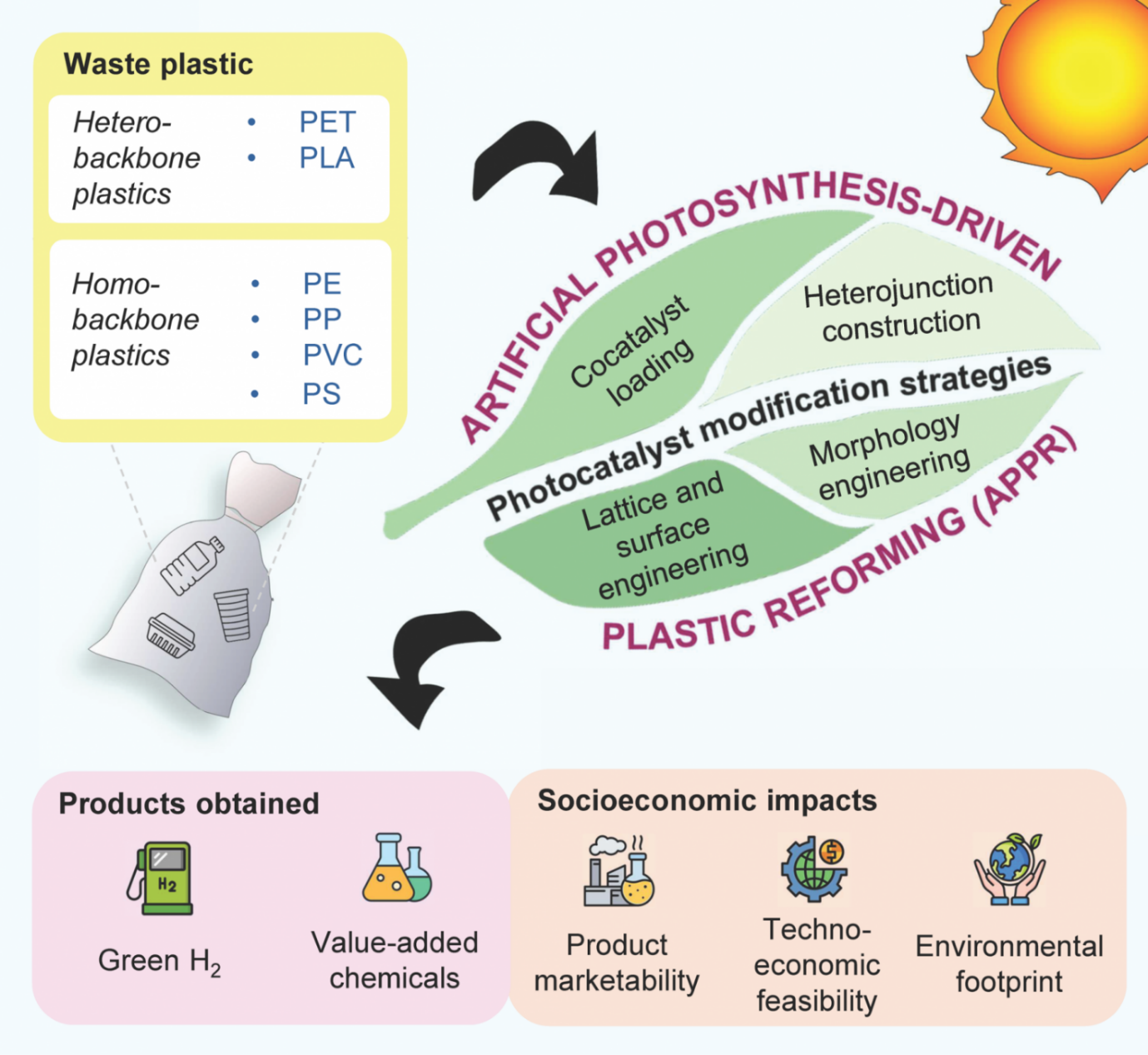
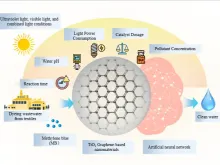
Graphical abstract of the work published in Advanced Functional Materials.
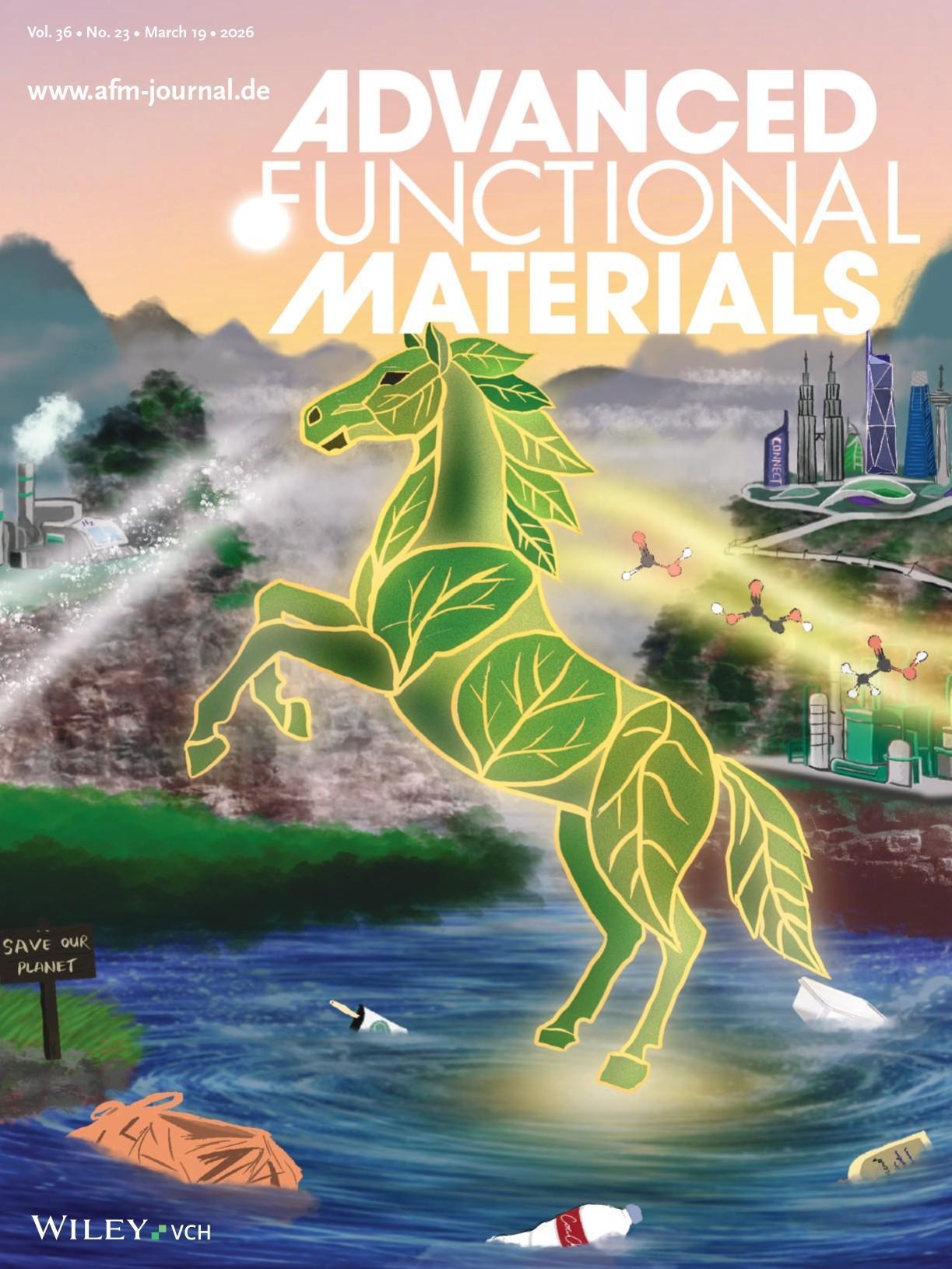
Inside Back Cover feature, Advanced Functional Materials, 36(23). (cover artwork available at: https://doi.org/10.1002/adfm.74744)
These research projects were supported by funding from the Ministry of Higher Education Malaysia (FRGS), the Ministry of Science, Technology and Innovation (MOSTI), PETRONAS Research Sdn. Bhd., the National Natural Science Foundation of China, the Guangdong Basic and Applied Basic Research Foundation, the State Key Laboratory of Physical Chemistry of Solid Surfaces at Xiamen University, the Embassy of the People's Republic of China in Malaysia, and Xiamen University Malaysia's Investigatorship Grant and Research Fund.
The published articles can be accessed at:
1. https://www.sciencedirect.com/science/article/pii/S2589965126000528
2. https://doi.org/10.1002/smtd.202501130
3. https://doi.org/10.1002/adfm.202525034
Prof. Dr. Ong Wee Jun received his B.Eng. and PhD in chemical engineering from Monash University. He is a Professor and Assistant Dean in School of Energy and Chemical Engineering at Xiamen University Malaysia. Starting from 2021, he serves as the Director of Center of Excellence for NaNo Energy & Catalysis Technology (CONNECT). His research interests include nanomaterials for photo(electro)catalytic and electrochemical H2O splitting, CO2 reduction, alcohol oxidation, H2O2 production, plastic reforming, N2 fixation and nitrate reduction, as well as microwave plasma methane cracking for graphene and hydrogen production.For more details, please refer to his website at https://sites.google.com/site/wjongresearch/