Beyond XMUM | Taking Over a Family Business in a Male-Dominated Industry
Published on October 19, 2026
Choosing where to live, what work to pursue, how to build a career, and what kind of family life to create—after leaving university, life no longer follows a single predetermined path. Everyone also has a different answer to the question of what makes a "good life".
In Beyond XMUM series, we invite XMUM alumni to share their real-life career experiences and stories after graduation, documenting their journeys, growth, and reflections at different stages of life.
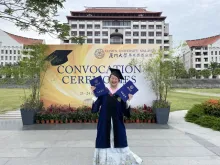
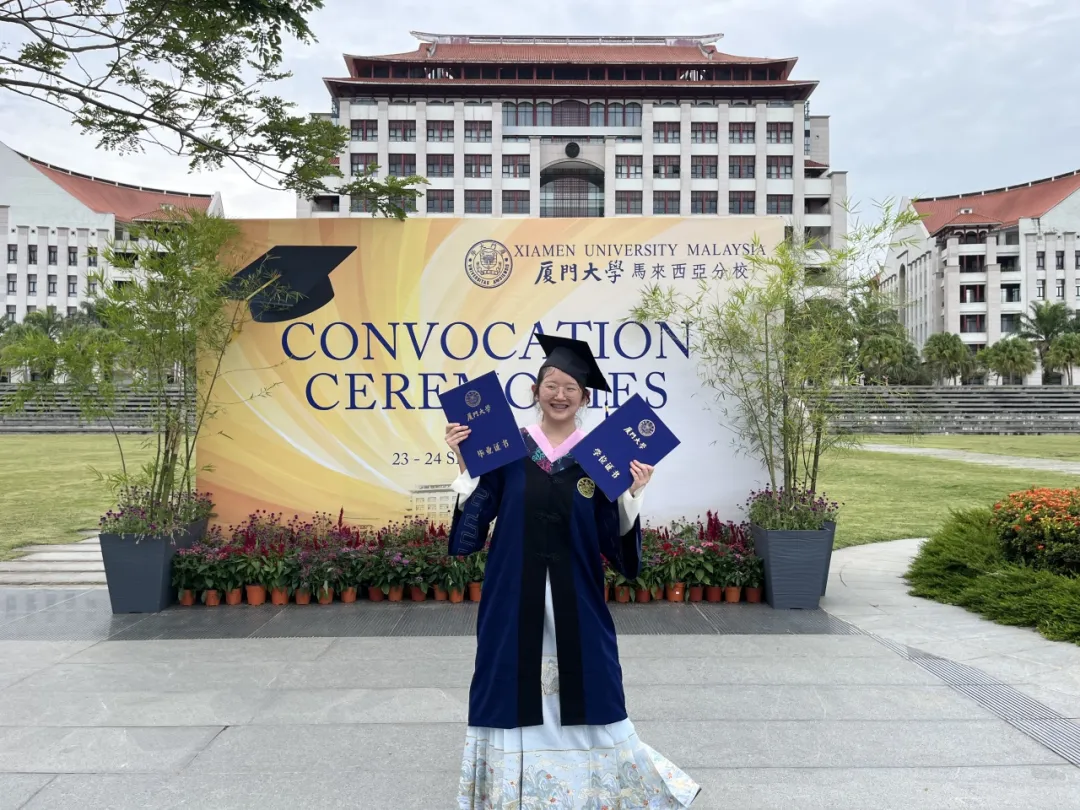
Alumni Spotlight: Chong Kai Xin, a 2022 MA in Chinese Studies graduate, currently helping her own family’s business in Malaysia.
Image
Q1: Could you briefly introduce your career journey after graduation?
After completing my master's degree in 2022, I worked as a logistics executive for a Chinese company for a year and a half, then joined a Japanese company. Early last year, I left my job and returned home to help with my family's business, which I will eventually take over.
We sell surveying instruments used in the construction industry and provide technical training and equipment maintenance. Although I am officially part of the Marketing Department, I also handle procurement, sales, logistics and finance.
Q2: You did not pursue a career in traditional Chinese Studies fields such as education, media or publishing. Why?
I have never been particularly interested in working with written content, so I mainly applied for administrative and HR positions in the first place.
At a career fair, I met a Chinese company that was expanding its team. I initially interviewed for an HR position, but the interviewer noticed my experience in data organization and analysis and suggested that I try logistics instead. I received an offer soon afterwards.
I ended up enjoying logistics more than I expected. A lot of the work involved analyzing information and spotting patterns, and I could apply what I had learned during my postgraduate studies to improve work processes. For example, I helped organize container shipment data more efficiently.
Q3: Why did you decide to return home and take over the family business?
My first job was quite demanding, with frequent overtime and weekend work. Eventually, I found myself feeling anxious whenever I put my phone down because I was worried about missing something.
My father was also in poor health, so I moved to a job closer to home. After he passed away, I realized that the business would have to close if nobody took over. I thought about how much effort my father had put into building the business, as well as the employees who had been working there for years, and decided to take it on.
Q4: What is the biggest difference between being an employee and running a business?
When I was an employee, I mainly had to focus on my own work. Now, I have to make decisions for the business, especially when negotiating prices with customers or dealing with projects whose requirements keep changing.
Fortunately, our long-serving employees know the business inside out and often give me useful advice. I am still learning, and I know it will take time to get the hang of everything.
Q5: What challenges have you faced in your current role?
Gender bias is still an issue in Malaysia's surveying equipment industry, where most business owners and construction-site surveyors are men.
Once, I was arranging an equipment delivery to a construction site when a customer heard my voice on the phone and said, "I don't want to talk to you. Get a man to talk to me instead."
At supplier conferences, people sometimes approach the men around me rather than explaining their products to me directly. When that happens, I ask questions if I need to. Otherwise, I listen and learn what I can.
Q6: Has the industry changed as younger people enter the field?
There are still not many people my age in the industry, but the way we do business is changing. We now use TikTok, Xiaohongshu and Facebook to promote our products. For example, our sales manager makes TikTok videos showing customers how to adjust their instruments. We also sell affordable spare parts on Shopee.
Q7: How have your studies in Chinese Studies influenced your work?
I learned a lot at university beyond what was taught in class. Group assignments, student activities and leadership roles helped me develop my communication, teamwork and problem-solving skills.
My studies also taught me to look beyond the surface of a problem, understand what is causing it and work towards a solution.
Q8: What is your most memorable university experience?
In my final year as an undergraduate, I helped organize the Nanying Cup International Chinese Debate Tournament while working on my thesis. At one point, I stayed up for 24 hours straight. I slept for just two or three hours before getting back to work. When the competition was over, everyone else could finally relax, but I still had my thesis to revise!
Not long afterwards, the pandemic disrupted my graduation plans. I never got to say a proper goodbye to my friends before we went our separate ways. Luckily, we all happened to return this year, so I finally got to see everyone again.
Q9: If you could go back to your student days, would you change anything?
Not really. I think I would make the same choices all over again.
Q10: What are your plans for the next few years?
I will keep working and see how things go. One thing I really hope to do is buy a house of my own.
Q11: Is there anything else you would like to share?
My only regret about my postgraduate studies is that the pandemic happened during that time.
I sometimes wonder whether, when we are in our fifties or sixties, we will look back and ask one another how old we were when the pandemic hit. Some people were preparing for university entrance exams, while others were already working. For me, it happened just as I was graduating from university.
It was a very different experience for everyone, but I think it is something people of our generation will remember.
The guests in this series are either self-nominated alumni or recommended by classmates. If you would also like to share stories about your career and life after graduation, please feel free to contact news@xmu.edu.my.