
Some Remarks on Classical and Adelic Eisenstein Series
April 7, 2025 (Monday), 3:30 pm – 4:30 pm A4#G04
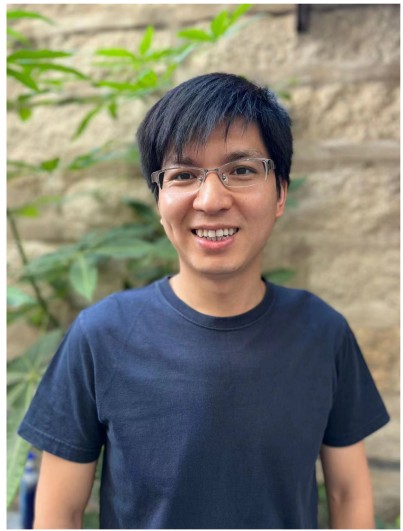
Shaoyun Yi
Assistant Professor
Xiamen University
Research interests: Number Theory & Representation Theory
Speaker Introduction
Shaoyun Yi is an Assistant Professor at the School of Mathematical Sciences, Xiamen University. He received his bachelor’s degree in mathematics from the University of Science and Technology of China in 2012 and earned his Ph.D. in2019 from the University of Oklahoma. His research focuses on number theory and representation theory.
Abstract
In this talk, we will discuss the classical Siegel Eisenstein series of weight k and degree 2 within an adelic framework, mainly applying the method known as “Hecke summation”. In the process, we recover the classical Fourier expansion of the Siegel Eisenstein series from an adelic point of view. One of our goals is to determine the automorphic representations associated to these Siegel Eisenstein series, particularly for the case of weight k= 2, where the underlying global representation is highly reducible. We will begin by introducing the necessary background and motivation for this work. Next, we will review recent results in the study of classical and adelic Eisenstein series for GL(2)(the degree 1 case), which may be viewed as a toy example. Finally, we will present an overview of our ongoing work on the Siegel Eisenstein series of degree 2. These are joint works with Manami Roy and Ralf Schmidt.
In this talk, we will discuss the classical Siegel Eisenstein series of weight k anddegree 2 within an adelic framework, mainly applying the method known as “Heckesummation”. In the process, we recover the classical Fourier expansion of the SiegelEisenstein series from an adelic point of view. One of our goals is to determine theautomorphic representations associated to these Siegel Eisenstein series, particu-larly for the case of weightk= 2, where the underlying global representation ishighly reducible. We will begin by introducing the necessary background and mo-tivation for this work. Next, we will review recent results in the study of classicaland adelic Eisenstein series forGL(2)(the degree 1 case), which may be viewedas a toy example. Finally, we will present an overview of our ongoing work on theSiegel Eisenstein series of degree 2. These are joint works with Manami Roy andRalf Schmidt.Department of Mathematics and Applied Mathematics, Xiamen University Malaysia