
Interacting Particle Systems and Optimal Couplings of Markov Processes
November 6, 2025 (Thursday), 3:30 pm – 4:30 pm A3#824
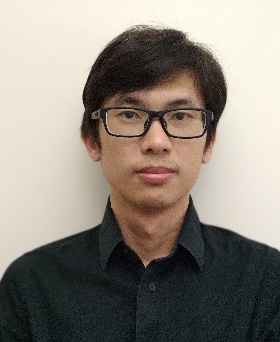
Lim Tau Shean
Assistant Professor
Xiamen University Malaysia
Research interests: Probability theory, stochastic processes, optimal transport, Markov processes, interacting particle systems, semigroup theory
Speaker Introduction
Lim joined Xiamen University Malaysia in September 2020. He earned his PhD (in mathematics) from the University of Wisconsin-Madison. His primary research interest is PDEs and probability, particularly how PDEs arise from a probabilistic model, and the connection/application in between.
Abstract
Interacting particle systems describe the collective evolution of a large number of particles whose dynamics are governed by underlying Markov processes. A prototypical example is the McKean–Vlasov diffusion, which can be viewed as the superposition of an independent diffusion component and an interaction term in the drift that depends on the empirical distribution (or mean field) of the system. An interesting phenomenon arising in such models is the propagation of chaos, which asserts that as the number of particles tends to infinity, any finite subset of particles becomes asymptotically independent, each following the law of the corresponding mean-field limit. A powerful tool for analysing this phenomenon is the coupling method, which provides a probabilistic framework to compare the evolution of interacting particles with their mean-field counterparts. The key idea is to construct a joint realisation of the two Markov processes in an efficient way that minimises their expected discrepancy, leading naturally to the concept of optimal couplings of Markov processes. In this talk, we begin with interacting particle systems and show how the notion of optimal coupling emerges from their analysis, before turning to recent developments on optimal couplings for Lévy processes.