
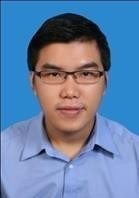
Biography
Dr. Lee Weng Chang obtained his Doctor of philosophy (Economics) at Universiti. Putra Malaysia. He lectures Economics, Econometric, Research Methodology, Business Statistics and Monetary Policy. He is also currently a member of Department of Economics Bureau at The Federation of Chinese Associations Malaysia (HuaZong) and previously as research associate at Institute of Strategic Analysis and Policy Research Malaysia (INSAP) (2021-2022). He also published some academic research paper in high impact journal such as Economics Modelling.
Research Interest
Institutional Economics, Economics Development, Innovation Economics, Applied Economics.
Educational Background
PhD (Economics), School of Business and Economics , University Putra Malaysia, Malaysia (2017)
MSc (Financial Economics), University Putra Malaysia (2011)
BSc (Financial Economics), Universiti Utara Malaysia (2007)
Working Experience
Lecturer, INTI University and Colleges, Malaysia (2015 to 2017).
Research Experience
Xiamen University Malaysia Research Grants
Representative Publications
- Tan, T.H. and Lee, W.C. (2023) “Life satisfaction and perceived and objective neighborhood environments in a green-accredited township: Quantile regression approach,” Cities, 134, p. 104196. Available at: https://doi.org/10.1016/j.cities.2023.104196.
- Trinugroho, I. et al. (2021) “Effect of financial development on innovation: Roles of market institutions,” Economic Modelling, 103, p. 105598. Available at: https://doi.org/10.1016/j.econmod.2021.105598.
- Law, S.H., Lee, W.C. and Singh, N. (2018) “Revisiting the finance-innovation nexus: Evidence from a non-linear approach,” Journal of Innovation & Knowledge, 3(3), pp. 143–153. Available at: https://doi.org/10.1016/j.jik.2017.02.001.
- Lee, W.C. and Law, S.H. (2017) “Roles of formal institutions and social capital in Innovation Activities: A cross-country analysis,” Global Economic Review, 46(3), pp. 203–231. Available at: https://doi.org/10.1080/1226508x.2017.1292859.