Dr. Thomas Boryniec: From Finance to Classrooms, Finding Home in Malaysia
Published on April 20, 2026
Over the past years, Xiamen University Malaysia has welcomed scholars from around the world whose diverse experiences enrich both the classroom and campus life. Among them is Dr. Thomas Boryniec, Assistant Professor at the School of Economics and Management.
Since joining XMUM in April 2025, Dr. Boryniec has brought with him an international academic journey spanning Europe and Asia. From Austria and Poland to the United Kingdom, Singapore, China and now Malaysia, he has lived and studied across six countries while working with four languages (he is currently learning his fifth language which is Malay). Today, his research focuses on venture capital, international business, artificial intelligence and blockchain finance.
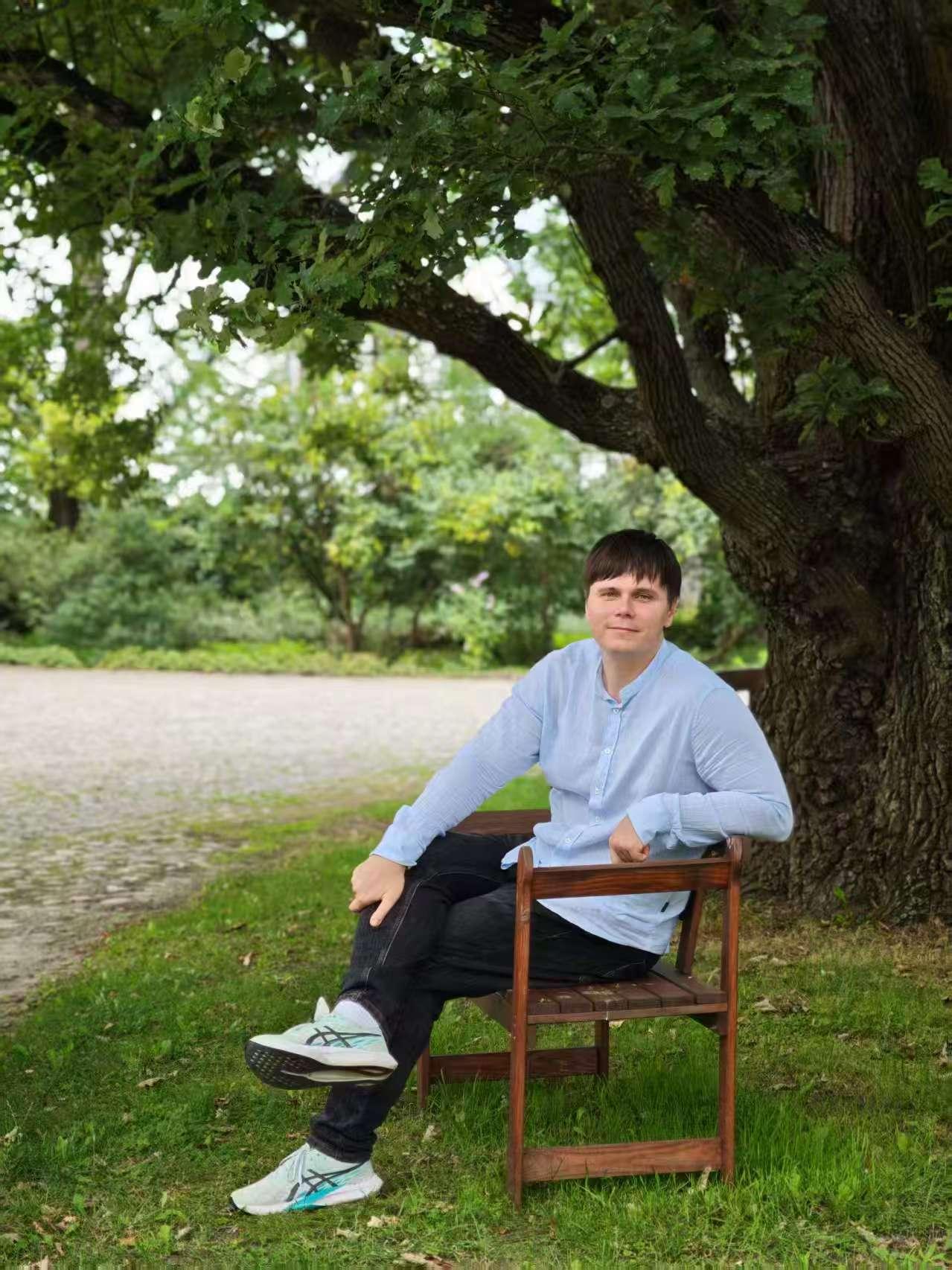
For Thomas, this global journey began with a simple piece of advice from his father.
While studying as an undergraduate at Queen Mary University of London in 2007, after being recommend by his department, he had the opportunity to apply for three exchange destinations: Nanyang Technological University in Singapore, the University of Sydney, and the University of California, Berkeley. Like many students, he initially leaned toward Berkeley. However, his father encouraged him to consider a different path.
“He suggested that I go to Asia,” Thomas recalls. “He said Asia is the future. Instead of following the crowd, I should explore something unknown.”
That exchange experience soon became a turning point in his life. During his time at Nanyang Technological University, he was first deeply exposed to East Asian culture and gradually developed a strong interest in the Chinese language and Chinese culture.
In 2008, he travelled to China during his holidays to study Chinese for the first time. The country left a profound impression on him.
“I was amazed by how friendly people were, and the food was incredible,” he says. “I felt that the country had enormous potential.”
The following summer in 2009, he travelled again to China, this time to Shijiazhuang, to continue learning Chinese. The experience still feels surreal to him. Not long after the Beijing Olympics, many locals were curious about foreign visitors and often approached him warmly wherever he went. Even more surprisingly, he was the only student in his Chinese class, which essentially became a one-on-one learning experience.
“That was when I released that one day I would want to return to China,” he says.
After graduating from Queen Mary University of London, Thomas entered the investment banking sector in London, working as a research assistant in debt capital markets at the financial technology company Dealogic. The job allowed him to gain valuable exposure to global financial markets and analytical work.
However, over time, he began to realize that his true interests lay elsewhere.
“I discovered that I enjoyed the process of learning and explaining complex ideas much more than purely industry work,” he explains. “Teaching and research gave me a sense of fulfilment that finance alone could not provide.”
This realisation eventually led him back to academia. In 2018, he began his PhD studies in Applied Economics at Antai College of Economics and Management, Shanghai Jiao Tong University.
The transition was not easy at first. He had to adapt to both demanding academic coursework and studying in a non-native language.
“The learning curve was quite steep,” he recalls.
Fortunately, the support of his classmates helped him overcome these challenges. Through regular discussions and study groups, they worked together to tackle difficult concepts and problem sets.
“That kind of collaboration had a profound impact on me,” he says.
With persistence and a supportive academic environment, he gradually adapted to the programme and achieved strong academic results in both coursework and qualification examinations. During his doctoral studies, he published papers in SSCI-indexed journals, participated in international conferences, reviewed academic manuscripts and contributed to a China National Social Science Foundation research project.
His doctoral supervisor also played a crucial role in shaping his academic development.
At the beginning of his PhD, Thomas was eager to move directly into data collection and empirical analysis. However, his supervisor insisted that he first build a strong theoretical foundation through an extensive literature review. After completing his coursework, he spent an entire year writing a comprehensive review of more than 100 pages, systematically analyzing all SSCI-indexed research on cross-border venture capital.
The work was later refined and published in a core journal in the venture capital field.
“Spending a year writing that review completely changed the way I conduct research,” he reflects. “It made everything afterwards faster, clearer and more impactful.”
His supervisor also encouraged him to combine academic research with real-world practice. Drawing on his earlier experience in investment banking, Thomas collaborated with venture capital funds and start-ups, gaining first-hand insights into investment decision-making, innovation and financial risk. These experiences continue to shape his current research interests in venture capital, international business, artificial intelligence and blockchain finance.
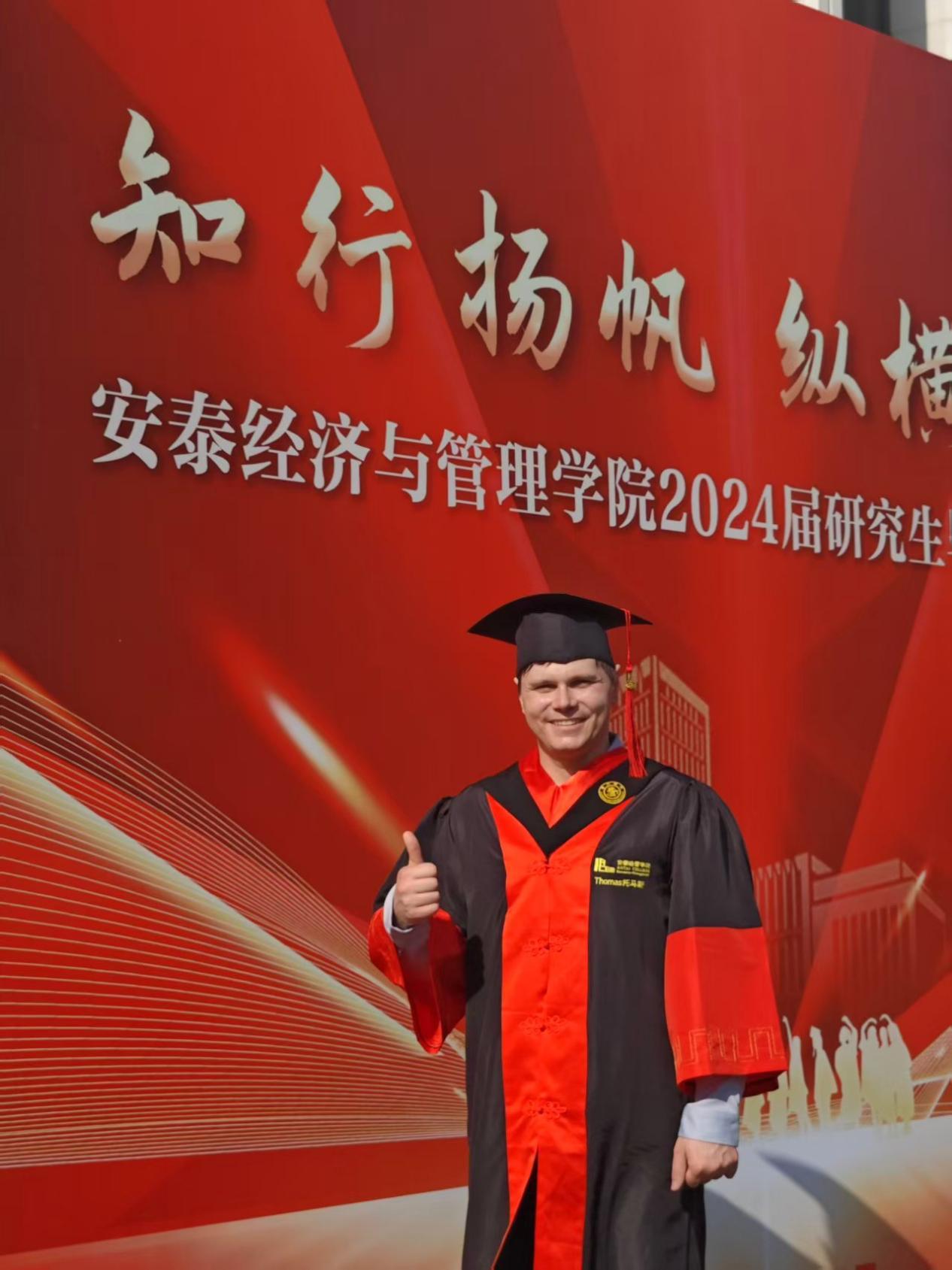
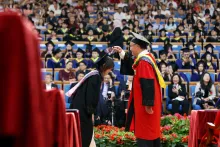
Thomas at his PhD Graduation Ceremony
After completing his PhD, Thomas initially planned to remain in China to pursue an academic career. However, his plans changed after interviewing at Xiamen University Malaysia.
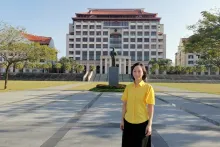
“When I first saw the campus, I fell in love with it immediately,” he says. “XMUM is one of the most beautiful campuses in Malaysia, and the atmosphere here made me feel very welcome.”
He was also attracted by the university’s integration of different educational traditions and its strong emphasis on both teaching and research.
“Here, you can develop as a scholar while also being deeply involved in students’ learning. I value that balance very much.”
At XMUM, Thomas primarily teaches Financial Econometrics and Blockchain Finance. Drawing on his experiences across different education systems, he adopts an interactive teaching style that encourages discussion and practical application.
He still remembers his first lecture at XMUM.
“I was very nervous walking into the classroom,” he recalls. “Financial Econometrics is a highly technical course for final-year students, and it requires a solid foundation in statistics and econometrics. I knew I had to be extremely well prepared.”
To improve the classroom experience, he constantly communicates with students and adjusts his teaching approach. He often explains difficult concepts in several languages to ensure that students from different backgrounds can understand them. He also invites students to the whiteboard to work through problems together, creating a more dynamic and inclusive learning environment.
Preparing for classes frequently keeps him working late into the night, sometimes until the early hours of the morning. Even after midnight, he often replies to students’ questions.
At the end of his first semester, several students approached him after the final class to take photos together and thank him. The moment left a lasting impression on him.
“That moment really touched me,” he says. “It reminded me why I chose this profession.”
Later, one student from that class became the first undergraduate thesis student he supervised.
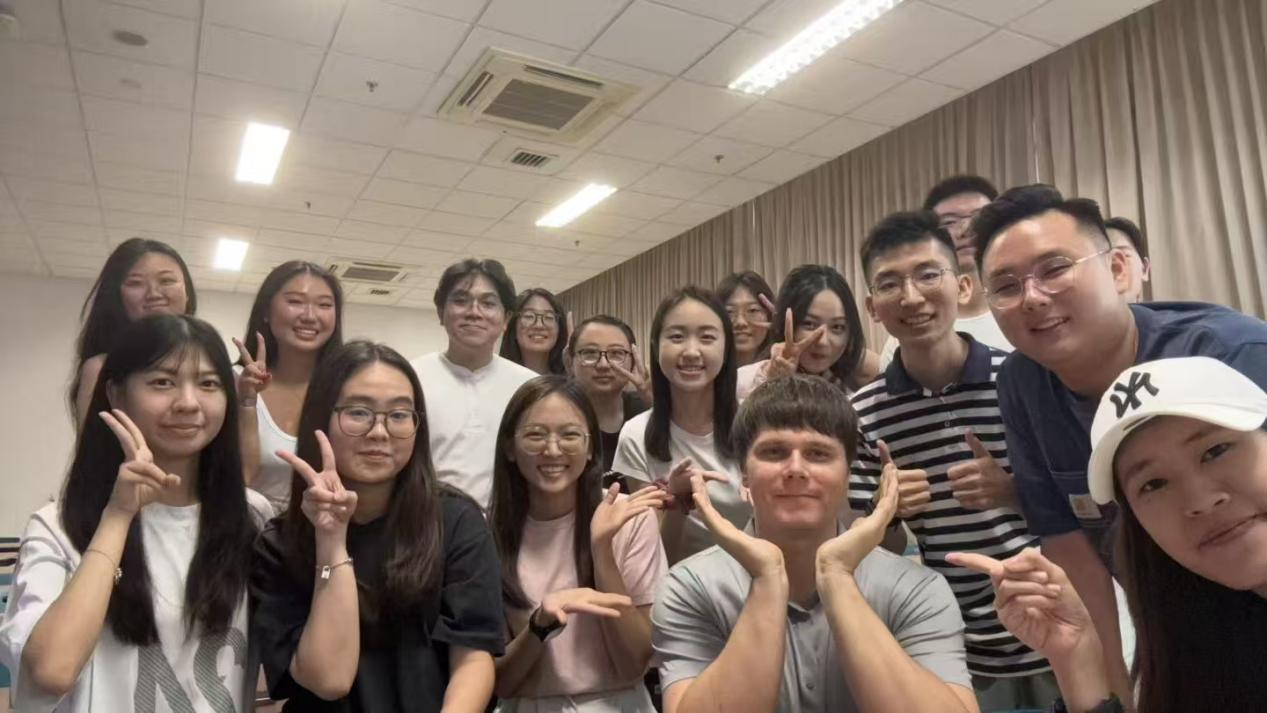
Thomas with his first students
For Thomas, economics is not simply about equations. It is a way to understand how markets, institutions and individuals behave and interact - and how those interactions shape everyday life.
For this reason, he hopes to combine rigorous academic training with practical industry perspectives in his teaching, helping students understand not only economic theories but also how they operate in the real world.
“Research enhances teaching, while teaching helps to clarify and organise ideas,” he says. “But the most rewarding part of academia for me is seeing students develop the skills and confidence that will shape their future careers.”
(Contributed by Zhai Fangrui)